Pillar 2 Dashboard
A high-level view of Pillar 2 implementation and key design features across jurisdictions.
Analysis of the domestic implementation of Pillar 2 globally. Detailed Country Guides, Local Compliance Requirements, PDF Report Builders, Tools, OECD Administrative Guidance and QDMTT Design Tracking and more.
A high-level view of Pillar 2 implementation and key design features across jurisdictions.
Track local filing requirements, timelines, and practical compliance checkpoints by jurisdiction.
Generate stakeholder-ready PDF reports and structured Pillar 2 outputs for client delivery.
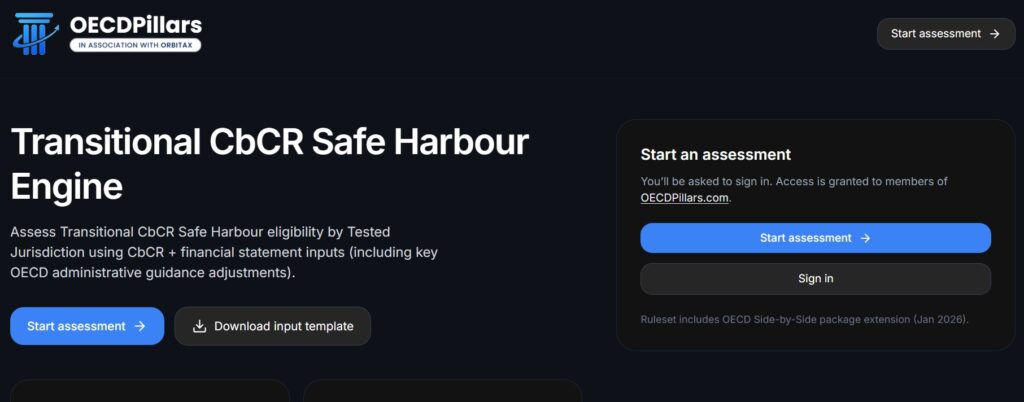
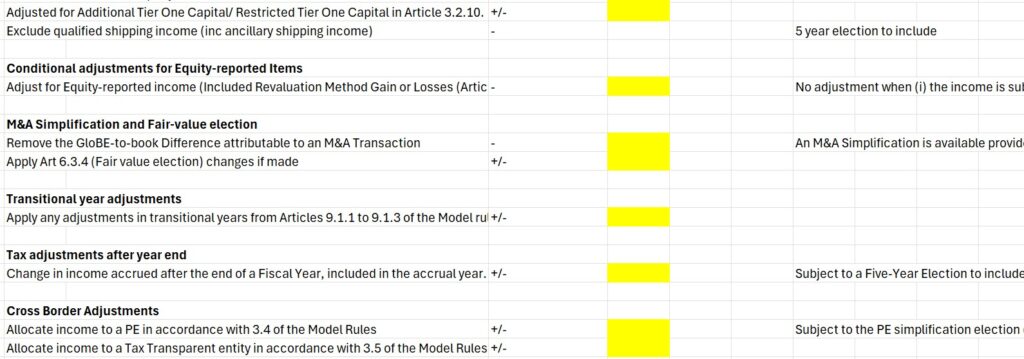
Assess Transitional CbCR Safe Harbour eligibility by tested jurisdiction and export structured outputs.
Work with GIR XSD data inputs and structured outputs to support Pillar 2 reporting workflows.
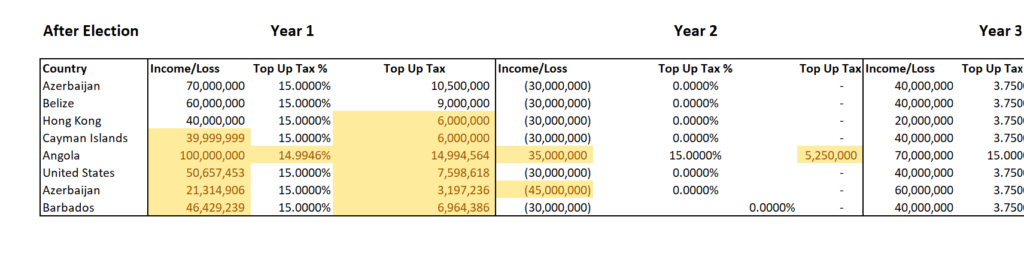
Automated tax engine to calculate whether the Simpified ETR Safe Harbour applies.
On April 9 and 10, 2026 , the Dutch Tax Administration’s Pillar Two Knowledge Group published two administrative positions on the treatment of joint ventures under the Dutch Minimum Tax Act 2024.
The first publication, KG:911:2026:2, addresses when an entity qualifies as a joint venture under article 1.2 of the Dutch Minimum Tax Act 2024. The second publication, KG:911:2026:3, addresses whether the Act’s location rule and the five-year transitional rule for the under-taxed profits rule apply when calculating top-up tax for a joint venture group.
On April 7, the Swiss Federal Tax Administration issued Communication-031-E-2026-f and Communication-030-E-2026-f to apply the OECD January 2025 and January 2026 Administrative Guidance.
On April 8, 2026, Germany issued a Draft Regulation which included a list of jurisdictions with qualifying status for the purposes of the IIR, UTPR, QDMTT and the QDMTT Safe Harbour.
On April 8, 2026, Italy’s Tax Authority issued an Order to approve the detailed technical specifications for the submission of Italy’s GloBE returns.
On April 8, 2026, Turkey issued its draft Global Minimum Tax forms.
Our OECD Pillar Two Tracker covers the latest developments at the OECD, EU and in domestic jurisdictions to keep you up-to-date with the implementation of Pillar Two.
Updated daily and with links to our more detailed analysis on the approach and impact of domestic implementation:


Featured Articles

On 9 and 10 April 2026, the Dutch Tax Administration’s Pillar Two Knowledge Group published two administrative positions on the treatment of joint ventures under

A guide to Italy’s three-track Pillar Two process: the reporting-entity notification, the DAC9/GIR (Comunicazione Rilevante), and the domestic GloBE Return (Dichiarazione fiscale Globe) with related

A guide to Australia’s Pillar Two filing. It covers the separate local GIR XML filing, the foreign lodgement notification, and the Combined Global and Domestic

A guide to Spain’s three-part Pillar Two workflow: model 240 (group/filing notification), model 241 (GIR-DAC9 information return), and model 242 (top-up tax self-assessment).

On April 7, the Swiss Federal Tax Administration issued Communication-031-E-2026-f and Communication-030-E-2026-f to apply the OECD January 2025 and January 2026 Administrative Guidance

On April 8, 2026, Germany issued a Draft Regulation which included a list of jurisdictions with qualifying status for the purposes of the IIR, UTPR,

On April 8, 2026, the Turkish Revenue Administration published draft versions of its Pillar Two Tax Returns/Notifications.

On April 3, 2026, Liechtenstein enacted an amendment to its Pillar Two Regulation (LGBl. 2026 Nr. 114). This includes amendments to the Pillar Two regime

A guide to Vietnam’s Pillar Two compliance flow: the reporting-entity notification, special tax registration, the GIR information package embedded in the Vietnamese filing package, and

This guide focuses on Austria’s GIR filing architecture as published by the Austrian Federal Ministry of Finance (BMF): access to FinanzOnline, filing channels, the Austrian
| Cookie | Duration | Description |
|---|---|---|
| cookielawinfo-checkbox-analytics | 11 months | This cookie is set by GDPR Cookie Consent plugin. The cookie is used to store the user consent for the cookies in the category "Analytics". |
| cookielawinfo-checkbox-functional | 11 months | The cookie is set by GDPR cookie consent to record the user consent for the cookies in the category "Functional". |
| cookielawinfo-checkbox-necessary | 11 months | This cookie is set by GDPR Cookie Consent plugin. The cookies is used to store the user consent for the cookies in the category "Necessary". |
| cookielawinfo-checkbox-others | 11 months | This cookie is set by GDPR Cookie Consent plugin. The cookie is used to store the user consent for the cookies in the category "Other. |
| cookielawinfo-checkbox-performance | 11 months | This cookie is set by GDPR Cookie Consent plugin. The cookie is used to store the user consent for the cookies in the category "Performance". |
| viewed_cookie_policy | 11 months | The cookie is set by the GDPR Cookie Consent plugin and is used to store whether or not user has consented to the use of cookies. It does not store any personal data. |